County governments often complain that illegal immigrants tax local resources and drain funds from their already strapped budgets. But at hundreds of county jails around the country, holding illegal immigrants has become a money-making opportunity.
As federal detention centers have filled to the breaking point, counties have begun offering beds in their jails – for a price. Immigration officials pay counties about $50 to $90 a day for each immigrant they house; for some counties, that money could not have come at a better time.
“The revenue from the federal government is used to defray costs across the board,” said Ben Feldman, spokesman for the Bergen County, N.J. Sheriff’s office. “It offsets expenses and enables us to keep the tax rate lower.”
Bergen County holds an average of 100 immigrants on any given day and brings in $85 per detainee, Feldman said.
Nationwide, 57 percent of all immigrant detainees are held in county jails. With 235,000 immigrants detained in 2004, the most recent year for which data is available, that’s about 130,000 per year in county facilities. And those numbers are expected to climb over the next year as the Bureau of Immigrations and Customs Enforcement (ICE) follows the Bush administration’s plan to detain more illegal immigrants.
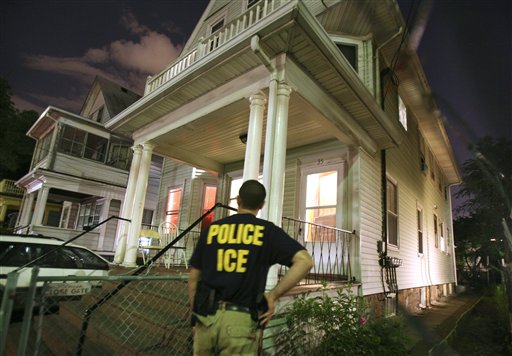
Because immigration officials say there are no plans to build additional detention facilities, the growth in demand will be met by counties eager for new revenues, as well as private prison companies that are expanding into detention.
In Bristol County, Mass., the local jail holds an average of 75 to 100 immigrants each day and charges the federal government $75 for each one, said County Sheriff Thomas Hodgson. County officials there are banking on receiving even more detention business. The county is currently building a new 120-bed center at a cost of $3 million, even though it does not have a contract to hold detainees at the new center.
“It was my feeling that, from what I knew was going on in regards to increasing population of detainees, that it made good sense to be pro-active and build the facility,” said Sheriff Hodgson. Aside from reaping new revenue, Hodgson is glad to have a facility that will allow immigrants captured locally to be detained near their homes, their friends and their families.
Similarly, Allegany County in western New York is building an expanded jail with an eye on the immigrant-detention business.
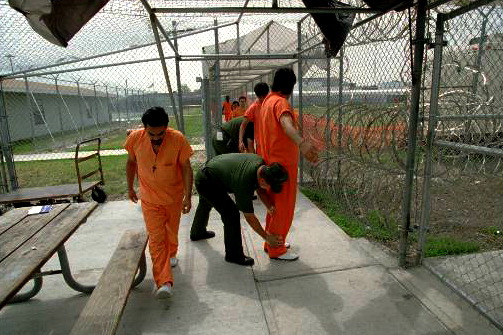
“It’s our hope that we can house approximately 75 inmates per day from outside jurisdiction, county and federal,” said Allegany County Administrator John E. Margeson. “It’s our hope that the revenue will pay the debt service on the facility, which is about $1.6 million per year.”
The county financed the $23 million facility through a bond offering.
In some circles, holding immigrants in county facilities is controversial. Immigrant advocates said that the federal government should be working toward holding fewer detainees in county jails, rather than increasing the number.
“County jails are meant to hold people that either just got drunk and got picked up, or people who will be sentenced for less than a year,” said Subhash Kateel, an organizer with Families For Freedom, a New York-based immigrant advocacy group. “That means the jails are holding people in a punitive situation. But if detention is punitive, it is illegal.”
Oversight is another problem, advocates said. ICE has stationed at least one official at each of its 16 detention centers. But ICE overseers would have to travel to the 312 counties that currently hold immigrants in their jails.
“The detainees are in a world where they don’t know what’s going on, and local jails often don’t know what’s going on,” said Elizabeth McGrail, the detention project director at the Capital Area Immigrants’ Rights Coalition based in Washington, D.C. “Immigration is supposed to be sending out caseworkers to the jails to make sure standards are being met, but often that just doesn’t happen.”
Immigration officials say that every jail holding detainees is reviewed annually, a process that involves checking 643 individual items to ensure the jail is complying with the agency’s standards.
“We consider it a rigorous review and a very good system,” said Jamie Zuieback, ICE spokeswoman. “Aside from the formal check, we have contact with these facilities on almost a daily basis as part of transfer, transportation and for other purposes.”
But advocates say that transporting detainees and checking standards are two separate functions. They also say that the more rural county jails are not only difficult for immigration officials to visit for more regular inspections, they can also be hard for lawyers to access. The pro-bono legal services on whom immigrants – who are not guaranteed a lawyer under U.S. laws – depend, are mostly located in large cities and can be hours away from jails located in rural, sparsely populated counties.
Still, county officials said they will take the money when they can get it.
“People in government need to start running the government a lot more like a business,” said Sheriff Keith Nygren, who expects his jail in McHenry County, Ill., to earn about $8 million this year holding immigrant detainees. “We took a look at the bottom line, and we were able to get additional funding back into the county fund that wouldn’t otherwise be there.”
Federal immigration officials seem comfortable with their growing use of county facilities. In 2005, McHenry County in Illinois received a $6.5 million grant from the federal immigration agency to add a third floor to its jail, which will allow it to hold an additional 302 detainees. County officials said they were grateful to have the construction costs defrayed.
“In the next ten or fifteen years, we would have been out doing this ourselves,” said Sheriff Nygren. “That’s the real silver lining because otherwise that would have been dumped onto the taxpayers.”
 Print
Print Bookmark