Politicians from Washington, D.C. and New York City were quick to complain early this summer when they learned that federal homeland security grants to their cities had been cut. Some, including Sen. Charles Schumer (D-N.Y.), charged politics, noting that both cities vote heavily Democratic. “Other states that have very little problems got an increase,” he said at a news conference.
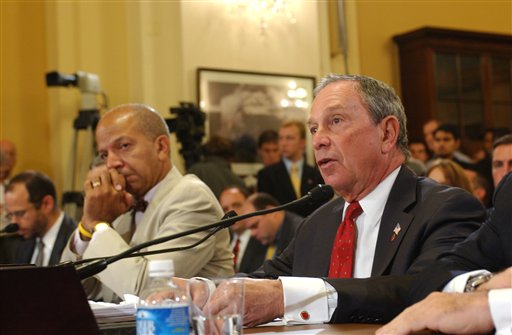
New York Mayor Michael R. Bloomberg also blamed politics and pork. “In many of the places where they got money — but arguably there’s no threat — there are close elections, either at the Senate level or at the House level,” he told the Los Angeles Times.
But an analysis of the grants doled out to cities and states across the nation doesn’t bear out those complaints, at least at the state level. In fact, the “blue” states that voted for Sen. John Kerry in 2004 fared better than the “red” states that favored President Bush. Analysis of grants to cities showed a murkier picture, but it also fails to suggest that politics is at work in the allocations.
“What’s lost in that question is that the entire nation got cut,” said P.J. Crowley, a senior fellow at the Center for American Progress. “There’re simply not enough resources going to the program.”
Everybody Is Losing Out
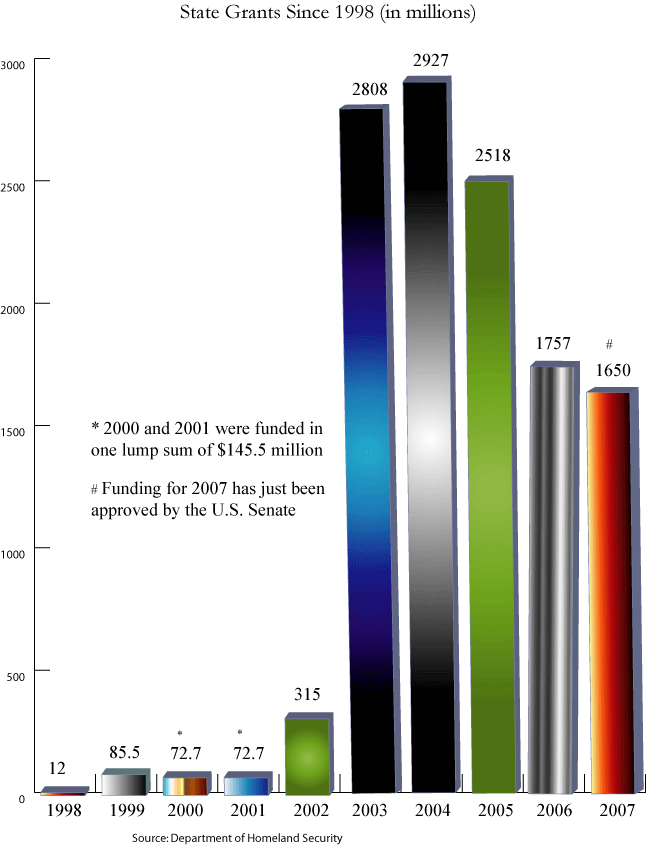
Overall, the pot of homeland security grant money has shrunk to $1.7 billion this fiscal year, from $2.9 billion in 2004 and $2.5 billion in 2005.
When monies from all five Homeland Security grant programs are added together, every single state’s take has declined since 2004 except for New York State. Its totals were flat: nearly $183.6 million in 2004 and almost $183.7 million this year.
In the current allocation, grants to both blue states and red states fell by an average of 37 percent and 38 percent, respectively, compared with last year’s totals. Over the two-year period since grants were announced in May 2004, grants to Democratic states dropped by 45 percent, on average, while Republican states lost about 52 percent of their grants, on average.
Four of the five states that took the biggest cuts over the last two years were Republican-leaning states in 2004: Tennessee, Arkansas, Mississippi and Virginia, which all received cuts of more than 70 percent. Minnesota, which went Democratic in 2004, suffered the steepest cut, 77 percent.
More of an “Inept Process”
That pattern is probably not dictated by partisan concerns. “I really don’t see it that way,” said Michael Greenberger, director of the Center for Homeland Safety and Security at the University of Maryland. He cited an “inept process” as the culprit for any discrepancies with terrorist risk.
Greenberger added that the grants were being cut because of lofty spending in other areas. “They’re running this huge deficit and the domestic budget was cut across the board,” he said.
Since 1998, the federal government has been giving anti-terrorism funding to states and local jurisdictions, first through the Office of Domestic Preparedness, which was part of the Department of Justice before the Department of Homeland Security was formed in 2003. In 2001, before the attacks of Sept. 11, the Office had a grant budget of about $145 million. Congress buffed up that total in 2003 to $2.8 billion, and the grants are now allocated through the department’s Office of Grants and Training.
Formerly based on critical assets, population and population density, the department changed the criteria for the urban area grants to a formula based on risk and on the effectiveness of proposed solutions.
“What was surprising to me is that they made a big deal of revising the way they do it, and it confuses the hell out of everybody,” said Eben Kaplan, an assistant editor with the Council on Foreign Relations. “New York shouldn’t be in a grant-writing race with towns like Omaha.”
Some Cities Gaining, Some Losing
Urban areas have actually received an increasing share of the pie, rising to 42.5 percent for the current fiscal year from 22.9 percent two years ago.
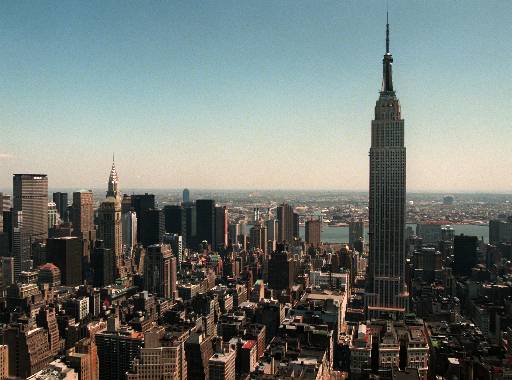
Seventeen of the 50 eligible cities received an increase in their high-risk urban area funding in 2006, compared with the year earlier. Jersey City and Newark, N.J., captured the largest increase, possibly because financial institutions in those cities were part of a thwarted attack plan revealed in 2005. That urban area received a $15 million increase from 2005 to 2006, bringing its total to $34.3 million.
Denver and Phoenix had the biggest cuts overall – 50 and 60 percent, respectively. Buffalo, Pittsburgh and New Orleans had their budgets decrease by half. Again, politics was not obvious in the calculation: Colorado and Arizona voted Republican in the last presidential election, and New York, Pennsylvania and Louisiana went Democratic.
Greenberger pointed out that San Antonio, Houston and Dallas, all cities in Bush’s home state of Texas, staunchly Republican, received decreases in grant funding.
In contrast, the cities that received urban area funding for the first time in 2006 were Miami and Fort Lauderdale, both in Florida, and Memphis. These cities are in states that voted for Bush in 2004.
Still, Washington, D.C., which votes heavily Democratic and whose officials have also cried politics in recent weeks, also got a slight increase, to $54 million this year from $51 million in 2004.
A Percentage for Every State
The state grants process also has critics, who say too much money is going to places that are low risk and with a small population. Congress created part of that problem by dictating that a minimum of 0.75 percent of all state grant money must be given to each state and territory (including Washington, D.C.). That spending rule covers three programs: the State Homeland Security Grant Program, the Law Enforcement Terrorism Prevention Program and the Citizen Corps program. All told, they were allocated $960.3 million – or 55 percent of the total funds – for fiscal 2006.
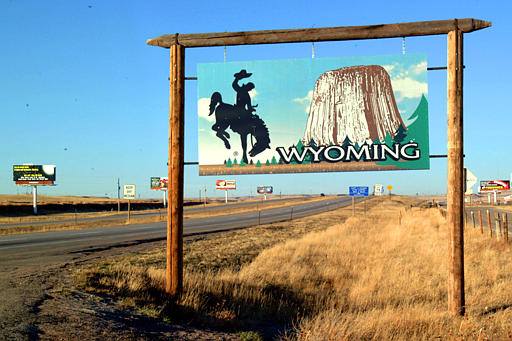
As a result, every state is guaranteed $7.2 million before risk and need are taken into account. This is why Wyoming, with a U.S. Census-estimated population of 509,294, receives $15.07 per capita and New York with an estimated population of 19,254,630 receives $9.54 per capita.
 Print
Print Bookmark