From the start, the Department of Homeland Security was supposed to be different: Protecting the United States from future terrorist attacks was seen as too important a mission to allow the department to succumb to the bureaucratic “business as usual” that pervades Washington, D.C. This imperative even extended to the budget appropriations process – the mechanics of how Congress authorizes spending for federal departments and programs. As DHS was being set up in early 2003, Sen. John McCain (R-Ariz.) warned that the department should be protected from “special interest or earmarking of funds that divert precious resources to other non-essential programs.”
Amazingly, the idea of protecting homeland security spending from the common congressional practice of “earmarks” – special purpose spending requests slipped quietly into appropriations measures without debate, often at the last moment – succeeded. Key congressman, early on, agreed to limit earmarking in DHS appropriations bills.
The nature of that agreement is anything but clear. News21 interviewed dozens of congressional staffers, analysts and policy experts, and received almost as many different opinions about it. What is clear is that the agreement is not a formal or outright ban: A few earmarks appeared in the very first DHS bill, and the number has since grown. What’s also clear, however, is that the agreement has been at least somewhat effective: The extent of earmarking in DHS bills has remained well below that of other departments. What remains to be seen is whether the agreement will continue to hold in the future, especially as some of the added pork appears to be coming from those very same appropriations committee leaders who agreed to limit earmarks in the first place.
Mysterious Agreement
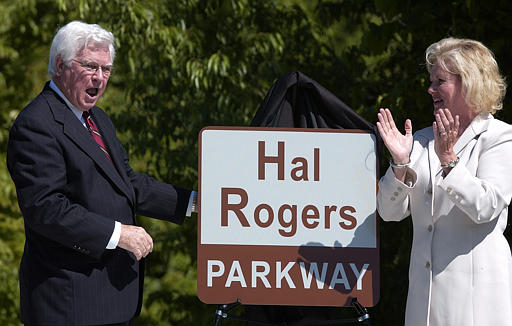
According to Washington insiders, the key congressmen who spearheaded the effort to keep DHS funding bills clean were Rep. Hal Rogers (R-Ky.), chairman of the Appropriations Subcommittee on Homeland Security, and Sen. Thad Cochran (R-Mo.), chairman of the Appropriations Subcommittee on Homeland Security from 2003 until 2005, although several other congressmen and senators also played significant roles.

Washington experts differ on the exact nature of the DHS earmark agreement. “It was definitely a gentleman’s agreement,” says Jennifer Porter Gore, of the Washington-based Project on Government Oversight, who notes that no official language in any bill, amendment, or hearing transcript mentions any kind of ban on earmarks. Says Jenny Manley, Cochran’s spokesperson: “It’s not so much a ban – it’s more of a practice.” Some Capitol Hill insiders are simply unaware of it. “That’s something I’ve never heard of,” says Nikki Watts, spokesperson for Rep. Mike Simpson (R-Idaho), who sits on the House Appropriations Committee.
Anti-Earmark Experience To Date
The amorphous nature of the anti-earmark agreement was evident in the very first DHS appropriations bill, in June, 2003. Subcommittee chairman Hal Rogers, according to the political newspaper Roll Call, received nearly 2,000 requests for earmarks. Nearly all were denied, but a few survived. One, cited by Sen. McCain’s office after the bill was approved by the Senate, was an $18 million provision to repair bridges, including a $7 million, 14-mile CSX railroad bridge in Mobile, Ala.
Independent data from the Congressional Research Service, which conducts nonpartisan analyses for Congress, shows there were nine DHS earmarks in fiscal 2004, worth $44 million; nine more in 2005, worth $33 million; and 21 in 2006 amounting to a fat $232 million. (Data for fiscal 2007 has not been tabulated.)
While that total – 39 earmarks worth $309 million – may seem large, it’s dwarfed by earmark totals in spending bills for other federal departments. The Department of Agriculture’s 2006 appropriations, for instance, contained 689 earmarks totaling $504.9 million, or three percent of its entire budget; the Defense Department appropriations bill of that same year contained 2,847 earmarks totaling $9.4 billion, or 2.4 percent of its entire budget. By comparison, the $232.4 million of earmarks in the Department of Homeland Security’s 2006 appropriations made up 0.7 percent of its budget.
When perusing the Department of Homeland Security’s legislation for earmarks, it’s actually difficult to find line-items that can be considered highly wasteful and adverse to the department’s mission.
For example, in fiscal 2006 over $44 million was earmarked for the renovation and construction of a Federal Law Enforcement Training Center in Artesia, N.M., home state of Sen. Pete Domenici, the second-most senior sitting Republican in the Senate.
In San Diego, Calif., $35 million was earmarked for a border fence in the district of Rep. Duncan Hunter (R-Calif.), who last year called for an $8 billion fence along the entire U.S.-Mexican border.
And another $50 million was set aside for a National Center for Critical Information Processing and Storage at the Stennis Space Center in Mississippi, home state to Cochran, now the Senate Appropriations Committee chairman.
David Keating, executive director of the conservative think tank, The Club for Growth, however, argues that if the program was so essential, it should go through the normal legislative process. “There’s no reason why it can’t be put into the bill instead of being slipped into a conference report,” he says.
Will the Gentleman’s Agreement Hold?
Some Washington observers are optimistic that the agreement to limit earmarks in DHS appropriations bills will continue to work. Scott Lilly, former minority staff director for the House Appropriations Committee, now a senior fellow with Center for American Progress, feels that public relations will be the key: “I think Congress has gotten into enough trouble with earmarks already without expanding this further.”
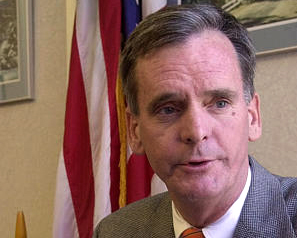
Others are not so sanguine. Says Peter Kant, a former lobbyist who’s now vice president of government affairs at Rapiscan Systems, a Hawthorne, California-based maker of metal detectors, “As we get further and further from the original DHS year, we get more and more of them.”
One way to get earmarks out of DHS spending would be for Congress to pass an outright ban on earmarks in all spending bills. Winslow T. Wheeler, a long-time staffer for such senators as Pete Domenici and David Pryor (D-Ark.) and staunch critic of earmarks, favors such a law. Anti-earmark legislation, Wheeler argues, should require that earmarks undergo review from “objective entities” like the CRS and the Government Accountability Office, which would examine their long- and short-term effects.
The next couple of years’ of budgeting experience – as well as reports from watchdog agencies – will reveal whether the informal agreement to limit earmarks in DHS spending is continuing to work, or whether the Department of Homeland Security, like many other federal departments and programs, will increasingly be viewed by Congress as a convenient way to garner funds for pet projects at the expense of the nation’s larger need to protect against terrorism.
 Print
Print Bookmark